
How to build a cult following without Black Friday deals
Black Friday is here again — that annual retail Hunger Games where brands scream until their fonts distort, and everyone else gets trampled in the pursuit of 40% off something they didn’t want yesterday.
And yet… every year, a few brands quietly sit it out. No flashing banners. No 72-hour countdowns. No “FINAL HOURS!” emails written like a hostage note. Just… normal. Calm. Confident. Such asThe Ordinary.
A brand that built a cult following by doing the exact opposite of everyone else… while charging $6.80 for a serum that could easily be $48—and buyers would pay it without blinking.
But here’s the twist: they won’t do it.
And that’s exactly why people love them.
The Ordinary Black Friday (Copyright © The Ordinary, 2025)
The Anti-Black-Friday brand
Yes, The Ordinary currently has 23% off sitewide.
No, it’s not their big “BUY NOW BEFORE WE ALL DIE!” blowout sale.
They go out of their way to explain:
“We believe shopping should be slow and intentional.
So for the 7th year, we’re closing our stores on Black Friday.”
They’re literally telling you not to buy into hype… while quietly offering a discount that feels more like a nudge than a shove.
This is not hypocrisy.
It’s strategy.
And it's brilliant.
Their sale is not positioned as “Black Friday madness.” It’s not a doorbuster. It’s not a bloodbath at Sephora. It’s a season-long, values-aligned gesture. They discount on their terms, not the market’s hysteria.
So… how do they get away with this?
1. They built trust first.
The Ordinary told the beauty industry:
“We’re not doing the fairy-dust marketing. Here’s the ingredient. Here’s the science. Here’s the price. Take it or leave it.”
You can’t bribe that kind of trust with 50% off coupons.
They built a community by stripping away every trick.
And once people trust you, they’ll follow you anywhere—even into a “Slowvember” where your stores are closed on the biggest shopping day of the year.
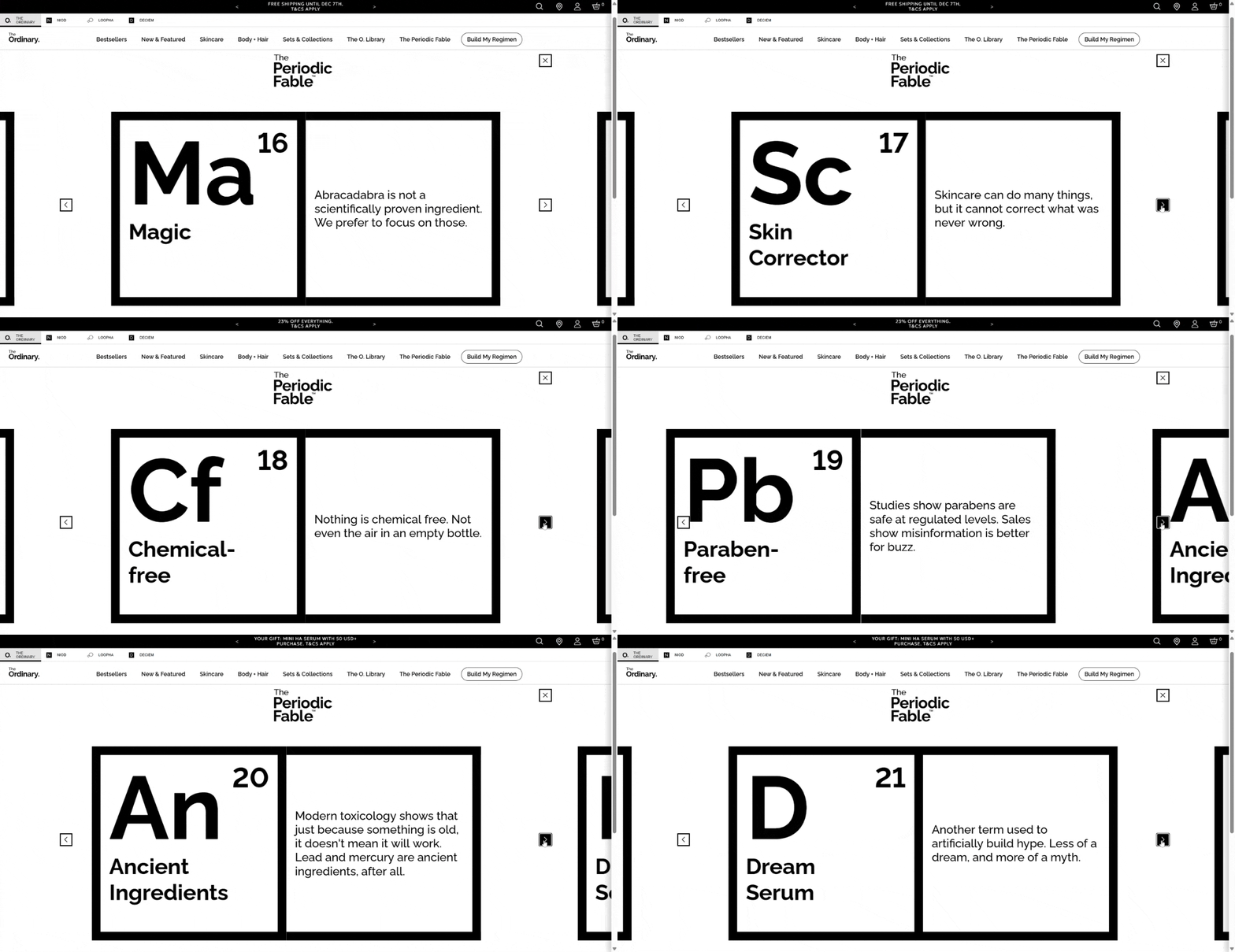
The Ordinary’s Periodic Fable (Copyright © The Ordinary, 2025)
2. They advertise their values, not their discounts.
The Ordinary does advertise—but not the way Maybelline advertises.
Their campaigns look like this:
giant white billboards with blunt black text
ingredient names bigger than the product image
posters saying “There is no miracle cream” in Helvetica
myth-busting that borders on anti-advertising
It’s advertising that feels like an eye roll at advertising, and because of that irreverence, people lean in. They feel like insiders instead of targets.
famouscampaigns.com (Copyright © The Ordinary, 2025)
creativeboom.com (Copyright © The Ordinary, 2025)
3. Their prices are low because their model is different.
This is the part the beauty industry hates talking about.
The Ordinary can sell a $7 serum because:
they don’t pour money into celebrity campaigns
they don’t make 18 versions of the same moisturizer
their packaging is intentionally simple
they share manufacturing and R&D with parent brand DECIEM
they focus on single-ingredient formulas, not gimmicks
they scale by volume, not margins
Their entire model is efficiency → accessibility → loyalty.
Here’s the kicker:
They absolutely could charge 4x more, and people would still buy it. But the minute they do that, the spell breaks. The trust cracks. The cult evaporates.
They don’t raise prices because their brand power comes from not raising prices.
Accessibility is their luxury. Transparency is their exclusivity.
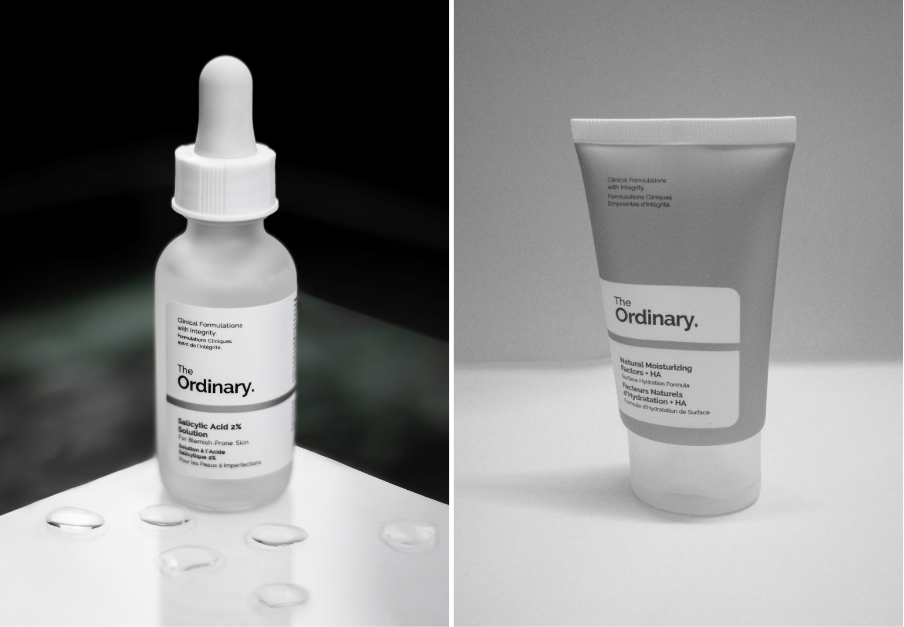
The Ordinary’s packaging proves you don’t need flashy design to build obsession—just clarity, consistency, and the confidence to keep things simple. (Copyright © The Ordinary, 2025)
4. They don’t chase the hype—they define it.
Most brands join Black Friday because they’re terrified not to. They shout the loudest, slash their prices the deepest, and pray the algorithm gods reward their sacrifice.
The Ordinary does the opposite.
On the biggest shopping weekend of the year, they close their stores.
They publish essays about fake deals.
They teach their customers how to spot marketing manipulation — often the very tactics other beauty brands are using that same day.
It’s almost comical.
Anti-hype… as hype.
Anti-marketing… as the most effective marketing strategy of the decade.
While everyone else is begging for attention, The Ordinary earns trust.
And that, ironically, is what makes them impossible to ignore.
Uncommon: The Truth Should Be Ordinary (Copyright © The Ordinary, 2025)
5. Consistency beats chaos.
This is the real lesson for small brands:
You don’t build a cult following by screaming the loudest on Black Friday.
You build it by being:
consistent
transparent
values-driven
clear about who you are (and aren’t)
confident enough to say “no” where others say “please buy”
The Ordinary doesn’t panic when November arrives.
They stay rooted and they stay themselves. And their customers reward that.
So, if you want your brand to have a cult following…
You don’t need discounts.
You don’t need urgency.
You don’t need chaos.
You need a point of view.
A backbone.
And the guts to say, “We don’t play the hype game.”
The Ordinary didn’t win because their formulas were cheap. They won because they paired low prices with radical transparency, consistent values, and a clear point of view. Small brands can’t copy their scale — but they can borrow the clarity.
If your brand could use that kind of clarity before 2026 hits…
👇🏻
I’m opening a few spots for end-of-year Brand Audits.
If you want to start January with a brand people actually remember — sign up to be the first to know.